
KEYNOTES


Prof., Dr. Sergey Y. Yurish
IFSA President, Barcelona, Spain
Dr. Sergey Y. Yurish is a president of International Frequency Sensor Association (IFSA) – one of the major professional association serving for sensor and MEMS industry and academy more than 20 years. Dr. Yurish is a founder of four companies, two of them related to microelectronics. Sergey Yurish is editor-in-chief of international peer-reviewed journal Sensors & Transducers and editor of open access Book Series on ‘Advances in Microelectronics: Reviews’. Dr. Yurish has got his PhD degree in 1996 from the National University Lviv Polytechnic (UA). He has published more than 170 articles and papers in international peer reviewed journals and conference proceedings. Sergey Yurish holds 9 patents and is an author and co-author of 12 books. He delivered more than 90 speeches, tutorials and keynotes presentations at industries, peer institutions, and professional conferences in over 30 countries. His research fields are precision frequency-to-digital converters, smart sensors and sensor systems.
Title: Artificial Intelligence-Enabled Smart Sensors: How to Make it Smarter?
Abstract:
Recent achievements in artificial intelligence (AI) in the past decade have made it possible to collect, analyze and interpret tremendous amount of sensory information. A new era for smart, intelligent sensors is emerging that changes the way that conventional sensors are used to understand the environment, and making sensors more effective.
Furthermore, recent advancements in microelectronics and emerging material science
have shown a potential solution for ‘self-learning’ and ‘adaptive sensor learning’.
Today more and more companies are manufacturing smart sensors with embedded machine
learning processing. However, such smart sensors require much higher level of integration.
The presence of plenty of analog components in such sensors such as operation amplifiers,
analog filters, voltage and current references, ADC, etc. significantly decreases the level of
integration and increase the power consumption at low voltage power supply, especially at
standard CMOS technological processes below some tens nm.
This presentations focused on the modern smart sensors design with embedded AI.
The proposed approach is based on the use of frequency as an informative parameter of
sensor output signal. It lets achieve the higher level of integration at the reduced chip area
and lower cost.
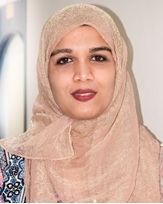
Assoc. Prof. Dr. Maleika Heenaye- Mamode Khan
University of Mauritius, Mauritius
Dr. Maleika Heenaye- Mamode Khan is currently an Associate Professor at the Department of Software and Information Systems, University of Mauritius. She is also the Faculty Research Advisor at the Faculty of Information, Communication and Digital Technologies. She received her BSc(Hons) in Computer Science and Engineering in 2006. In 2007, she obtained a scholarship from Tertiary Education Commission (TEC), Mauritius to pursue her PhD. She was awarded her PhD in the field of Computer Science and Engineering, University of Mauritius in 2015. She has 13 years of experience in academia and research. Her area of research includes Computer Vision, Medical Image Processing, Artificial Intelligence, Biometrics and Data Analytics. She has published several research papers in various International Journals (Elsevier, PLOS One, Hindawi, Taylor and Francis, MDPI and Emerald among others) and in Proceedings of the reputed International/ National Conferences as well. She is active reviewer of various reputed International Journals in her research areas. She has one completed PhD student and is currently supervising several students at Masters and PhD level. Dr Heenaye- Mamode khan has secured various research funds at national and international level. She has also initiated the setting up of a specialised Artificial Intelligence and Data Analytics (AIDA) Lab at the University of Mauritius.
Title: Medical Image Analysis using Artificial Intelligence: Current Status and Future Directions
Abstract: There are many types of images that are being captured during a medical diagnosis (MRI, CT-Scan, PET, gastroscopic images, endoscopic images among others. At times, there are misdiagnosis due to the fact that abnormalities or feature concerned are very small. In addition, there are artefacts that interfere with the diagnosis, making it more complex to draw accurate conclusions. Automated systems can definitely assist doctors in the medical diagnosis. The use of artificial intelligence (AI) in diagnostic medical imaging is undergoing extensive evaluation. It has now shown impressive accuracy and sensitivity in the identification and classification of imaging abnormalities. Researchers are striving hard in developing efficient and reliable solutions for medical diagnosis. Machine learning has shown tremendous potential in the development of such applications. However, the hand crafted techniques have the limitations of extracted only one type of feature. Consequently, deep learning surfaced to represent more features through various layers. To overcome computational constraints, pre-trained models, which have been trained on benchmarked datasets, are being adopted. Despite the fact that deep learning models have shown remarkable performance, medical practitioners are reluctant to adopt such models. This is because these models have opaque decision making process. The trend is now to develop models that are transparent and shows clearly the determinant factors that influence decision making.
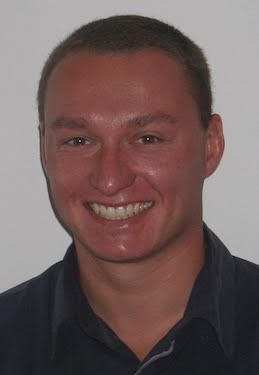
Prof. Dr. Johan Debayle
Ecole Nationale Supérieure des Mines / Saint-Etienne, France
Johan Debayle received his M.Sc., Ph.D. and Habilitation degrees in the field of image processing and analysis, in 2002, 2005 and 2012 respectively. Currently, he is a Full Professor at the Ecole Nationale Supérieure des Mines de Saint-Etienne (ENSM-SE) in France, within the SPIN Center and the LGF Laboratory, UMR CNRS 5307, where he leads the PMDM Department interested in image analysis of granular media. He is also the Deputy Director of the MORPHEA CNRS GDR 2021 Research Group. In 2015, he was a Visiting Researcher for 3 months at the ITWM Fraunhofer / University of Kaisersleutern in Germany. In 2017 and 2019, he was invited as Guest Lecturer at the University Gadjah Mada, Yogyakarta, Indonesia. He was also Invited Professor at the University of Puebla in Mexico in 2018, 2019 and 2020. He is the Head of the Master of Science in Mathematical Imaging and Spatial Pattern Analysis (MISPA) at the ENSM-SE.
His research interests include image processing and analysis, pattern recognition and stochastic geometry. He published more than 130 international papers in international journals and conference proceedings. He has been invited to give a keynote talk in several international conferences (SPIE ICMV, IEEE ISIVC, SPIE-IS&T EI, SPIE DCS, ICST, CIMA, ICPRS…).
He is the General Chair of the international conferences ISIVC’2020, ICIVP’2021, ECSIA’2021, ICPRS’2022 and served as Program committee member in several international conferences (IEEE ICIP, MICCAI, ICIAR…)
He is Associate Editor for 4 international journals: Pattern Recognition Letters (PRL), Pattern Analysis and Applications (Springer), Journal of Electronic Imaging (SPIE) and Image Analysis and Stereology (ISSIA).
He is a member of the International Society for Optics and Photonics (SPIE), International Association for Pattern Recognition (IAPR), International Society for Stereology and Image Analysis (ISSIA), Senior Member of the Institute of Electrical and Electronics Engineers (IEEE) and Vice-Chair Membership of IEE France Section.
Title: Digital twins for image and video analysis of granular media
Abstract: Granular media are widely used in many industrial applications and fields of science from physics to chemistry, biology or agronomy. In energy, power and chemical engineering systems, in particular, it is generally desired to extract information on geometrical characteristics and on spatial distribution from digital images of the population of particles/grains involved in the process. For example in pharmaceutics, the size and the shape of crystals of active ingredients are known to have a considerable impact on the final quality of products, such as drugs. As another example, the performance of fuel cells (SOFC/SOEC) is mainly related to the electrode microstructure (size and spatial distribution of the solid and porous phases).
The purpose of this talk is then to show different ways (deterministic and stochastic methods using digital twins) of image processing, analysis and modeling to geometrically characterize such granular media from 2-D or 3-D images/videos. The developed methods will be presented by addressing different issues: overlapping, projection, blur... The methods are mainly based on image analysis, pattern recognition and machine learning.
The methods will be particularly illustrated on real applications of crystallization processes (for pharmaceutics industry), multiphase flow processes (for nuclear industry) and fuel cell power systems (for energy industry).

Assoc. Prof. Dr. T. Pawan Fowdur
University of Mauritius, Mauritius
Assoc. Prof. Dr. T.P. Fowdur received his BEng (Hons) degree in Electronic and Communication Engineering with first class honours from the University of Mauritius in 2004. He was also the recipient of a Gold medal for having produced the best degree project at the Faculty of Engineering in 2004. In 2005 he obtained a full-time PhD scholarship from the Tertiary Education Commission of Mauritius and was awarded his PhD degree in Electrical and Electronic Engineering in 2010 by the University of Mauritius. He is also a Registered Chartered Engineer of the Engineering Council of the UK, Vice President of the IEEE Mauritius Section (from January 2022 to date) and member of the Institute of Telecommunications Professionals of the UK. He joined the University of Mauritius as an academic in June 2009 and is presently an Associate Professor at the Department of Electrical and Electronic Engineering of the University of Mauritius. His research interests include 5G Mobile Communications, Multimedia Signal Processing, Networking and Security, Telecommunications Applications Development, Internet of Things and AI. He has published several papers in these areas and is actively involved in research supervision, reviewing of papers and organizing international conferences.
Title: Intelligent Connectivity as an Enabler for the UN Sustainable Development Goals
Abstract: In 2015, the UN General Assembly set forth the Sustainable Development Goals (SDGs) in its resolution 70/1 with 2030 as the target year. These goals have been developed with the community involvement including academia, governments, and private sector. It encompasses three major sustainable community development dimensions (e.g., protection of the environment, social diversity and inclusions, and economic growth). There are 17 SDGs which have become the widely accepted and adopted standard system to attain the aim of sustainable community development. The SDGs are extremely ambitious and wide ranging. They are thus what can be called stretch goals, which may seem close to be impossible to reach, but which are nevertheless pursued in order to inspire and stimulate radical and ground-breaking approaches and efforts to make progress. There are only eight years left to achieve the targets of the UN SDGs by 2030 and achieving these targets appear even more challenging as the world is still struggling to cope with COVID-19. COVID-19 has in fact seriously compromised several SDGs such as SDG 1 (No Poverty) in which significant progress was being made. However, COVID-19 has also propelled the adoption of digital technologies to a much higher a rate. In particular, intelligent connectivity which is the combination of several technological enablers such as mobile communications (5G), Artificial intelligence (AI), Internet of Things (IoT), Cloud and Blockchain, is considered as one of the most impactful technologies that can help achieve the SDGs. While still in its infancy, intelligent connectivity’s ability to boost productivity, spur innovation, and accelerate the development of new business models will affect virtually every aspect of socioeconomic development in ways yet to be imagined. Fast, intelligent internet connectivity enabled by 5G technology is expected to create approximately $3.6 trillion in economic output and 22.3 million jobs by 2035 in the global 5G value chain alone. By expanding connectivity and making new digital services available at the touch of a button, intelligent connectivity has driven significant social, economic and environmental benefits and has contributed to all 17 SDGs, as will be elaborated in this speech.